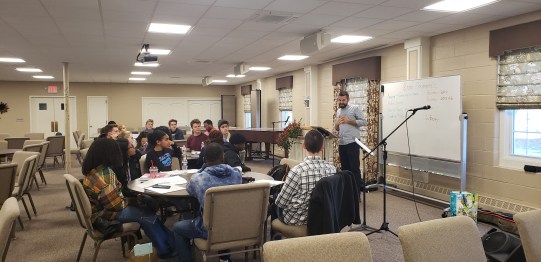
Here are seven weekend training conferences specifically geared for students. I developed these over my whole career, using various source material and with multiple inputs. Particularly helpful were the staff on my ministry teams. These are not finished products, but we used them for several decades to train students. You can use them in the present form, or as a guide to producing your own training. If you wish to adapt them to your situation, you should consult Guidelines for Execution and Adaptation for help. Contact me at cdavidgreen@gmail.com to learn more about training students and about these materials.
- Training Conferences – the nature of training conferences in contrast to general conferences
Conference Track Notes
- Bible Survey – a basic overview of the whole Bible
- Knowing and Growing in Grace – basic Christian beliefs and practices
- How to Study the Bible – how to discover the meaning of a passage of scripture
- How to Study the Bible – 4 Day – divided over 4 days instead of a weekend, adapted for non-training settings
- How to Share Your Faith– how to tell others simply and clearly the gospel message
- Leading Bible Studies – how to prepare and lead a discussion of a passage of scripture
- Leading Bible Studies – 2 Day – divided over 2 days instead of a weekend, adapted for non-training settings
- Training Disciples – how to train someone to serve Jesus in a specific role
- Foundations of Ministry – basic beliefs, goals, principles of spiritual growth, and the dynamics of a healthy ministry
Supporting Documents
- Track Descriptions contains a more detailed description of each of the conference tracks listed above.
- Bible Survey Resources contains a set of materials for use in the Bible Survey track.
- Bible Study Resources contains a set of materials for use in the How to Study the Bible tracks.
- Share Your Faith Resources contains a set of materials for use in the How to Share Your Faith track.
- Leading Bible Studies Resources contains a set of materials for use in the Leading Bible Studies tracks.
- Training Disciples Resources contains a set of materials for use in the Training Disciples track.
- Recruiting Information contains some information you might typically provide on a brochure, Eventbrite page, Facebook page, or announcement for one of these conferences.
- Guidelines for Execution and Adaptation provides guidance on how to adapt these tracks to different situations and audiences without compromising the integrity of the training and degrading the learning experience.
- Policies and Procedures Here are the policies and procedures we used to produce these training conferences on a large scale. Our highest participation was 260 students in one conference, and three conferences in one semester.

